EU introduces provisional quotas on hybrid car imports from China, Britain and other partners
The European Commission is introducing temporary 200-day import restrictions on hybrid passenger cars from global trading partners to protect domestic car makers.
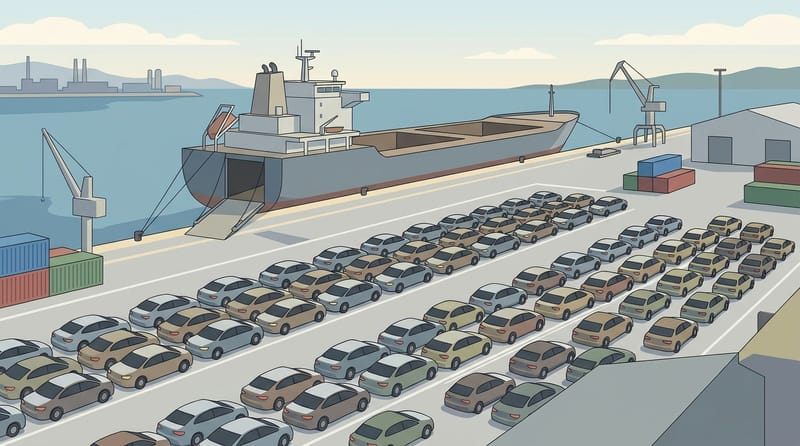
The European Commission announced that it will introduce provisional safeguard measures on imports of hybrid passenger vehicles starting on 1 December. The action imposes temporary import volume caps for up to 200 days while trade authorities complete a formal investigation into vehicle shipments entering the European market.
According to CnEVPost, the provisional caps apply to full hybrid electric vehicles, plug-in hybrid electric vehicles, and mild hybrid electric vehicles from all foreign origins. Regulators established country-specific volume allowances for export nations that represented more than 2% of the bloc's hybrid imports during 2025. Those allocations are set at slightly over 15% above each country's 2025 shipping volumes to the bloc, while all remaining origins must share a residual quota. The commission noted that any hybrid cars arriving beyond these limits will not be permitted for import.
Safeguard quotas and country limits
While the rules cover multiple international partners, the restrictions are designed to address a sharp rise in shipments from abroad. As reported by Euronext, the limits follow an understanding reached between Brussels and Beijing to restrict Chinese hybrid vehicle arrivals to 350,000 units per year. That figure equals roughly half the volume that had been anticipated to arrive in the EU over the year.
Under World Trade Organization safeguard rules, such trade measures must apply across all major exporters to the bloc rather than targeting a single nation. Beyond China, the quotas apply to shipments originating from Britain, Japan, Turkey, South Korea, the United States, Mexico, Morocco, and Serbia. Detailed breakdowns published in the EU official journal and covered by The Guardian show that China's allocation is set at 350,000 vehicles for the first year, or roughly 191,000 units during the 200-day provisional window. In comparison, annual limits for other key suppliers include 310,000 units for Japan, 230,000 for Turkey, 190,000 for the UK, and 105,000 for South Korea.
For most supplier nations, the assigned volumes remain sufficient to cover existing shipment patterns. The UK, for example, exported 166,000 hybrids to the EU in 2025, leaving room beneath its 190,000 ceiling. The European Commission evaluated trade volumes from the final six months of 2025 and the opening six months of 2026. While imports from Mexico, Morocco, and Serbia ran above the limits during that period, Mexico exceeded the threshold by fewer than 600 cars, and shipments from Morocco and Serbia fell notably in the second quarter of 2026.
Background
The safeguard inquiry was formally opened on 30 October. Regulators highlighted that rapid increases in hybrid imports since 2023 were driven by international production overcapacity and rising trade barriers in other parts of the world. The commission determined that local automakers faced shrinking market share and an imminent threat of serious injury, with Chinese imports also eroding the market positions held by traditional exporters like Japan and South Korea.
The surge in hybrids followed earlier regulatory measures directed at battery electric vehicles. In October 2024, the EU enacted definitive countervailing tariffs against China-made battery electric cars, but that decision excluded hybrids. In the official journal, the EU pointed out that imports of Chinese pure electric cars climbed from 21,000 in 2020 to 438,000 in 2024 before flattening once tariffs took effect. Following those duties, Chinese producers initiated a clear shift toward hybrid models. Worldwide hybrid exports from China grew from 191,000 vehicles in 2023 to 1.124 million in 2025. Data from Eurostat cited by China's commerce ministry showed that EU imports of Chinese hybrids jumped from 107,000 units in 2024 to 302,000 in 2025.
International pushback and industry reactions
The sudden introduction of quotas less than a month after initiating the inquiry has triggered friction with trade counterparts. China's Ministry of Commerce responded by urging the EU to adhere to bilateral consensus, abide by WTO rules, uphold non-discrimination, and maintain an impartial investigation. The ministry stated that it reserves all legal rights under the WTO framework, including trade dispute settlement proceedings and compensation claims.
Other trading partners have voiced procedural objections. At a WTO goods council meeting, South Korea questioned the transparency and fairness of the inquiry, while officials from Britain, Japan, Switzerland, and Turkey underscored the need for due process and transparency.
In Britain, automotive groups expressed concern over potential collateral effects. Mike Hawes, chief executive of the British motor trade association SMMT, stated that the British automotive sector should not become collateral damage from trade remedies aimed elsewhere. Hawes stressed that final decisions must respect the close EU-UK relationship as allies in adversity and avoid erecting new barriers across integrated supply networks. The issue intersects with existing trade tensions, as the UK is already contesting a scheduled 10% tariff on electric vehicle shipments to the EU slated for 1 January under the 2020 Brexit agreement, alongside discussions led by Andy Burnham to include the UK in the bloc's developing "Made in Europe" framework.
What happens next
The provisional quotas will stay in place for a maximum duration of 200 days while the European Commission continues its safeguard investigation. Definitive measures can be enacted within nine months of the 30 October launch date, with the possibility of a two-month extension. If the commission eventually recommends long-term definitive restrictions, those measures will require broad formal endorsement from EU member governments to take effect.
Was this helpful?