Winter storms threaten Thanksgiving travel across the United States
Severe rain, snow, and coastal flooding are disrupting holiday journeys for tens of millions of drivers and airline passengers.
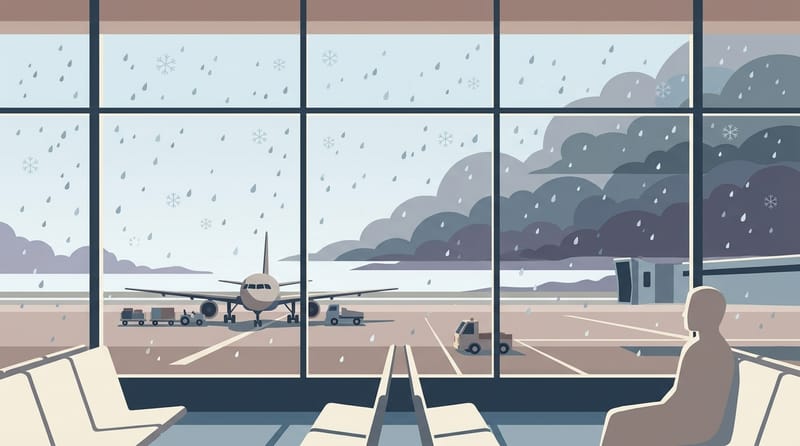
Tens of millions of holiday travellers across the United States face severe weather disruptions as a series of powerful storm systems sweeps through the country. According to The Guardian, as many as 81 million people are projected to travel during the Thanksgiving holiday period, with the vast majority—more than 72 million people—planning to reach their destinations by car.
From heavy snowfall and biting temperatures in the northern Plains and upper Midwest to drenching rains along eastern corridors and major tidal flooding along the Pacific coast, the adverse conditions threaten to snarl transit networks during what is traditionally the busiest travel week of the year.
What it means for you
Travellers must prepare for widespread transit interruptions, slower commutes, and potential flight cancellations depending on their destination and method of transport.
- Check official route forecasts: The National Weather Service recommends that individuals consult its official website to monitor the latest forecast updates along their specific travel routes and to plan their departures in advance.
- Monitor highway conditions: Drivers in the northern tier should prepare for slippery surfaces, blowing snow, and an elevated risk of vehicular crashes. Delays are anticipated along northern thoroughfares including Interstate 29, Interstate 90, and Interstate 94. In the south and east, heavy downpours are forecast to slow traffic on major arteries such as Interstate 20, Interstate 40, Interstate 65, Interstate 75, and Interstate 95.
- Confirm flight schedules before departure: Travellers heading through major transit hubs should verify flight statuses directly with their airlines. Severe delays and logistical challenges are projected at hubs such as Chicago, Detroit, Minneapolis–Saint Paul, Pittsburgh, Cincinnati, St. Louis, Atlanta, Boston, and New York City.
- Account for elevated driving expenses: Holiday motorists must also navigate high fuel prices. Data from the motor club AAA shows the national average for regular gasoline recently reached $3.64 per gallon, sitting six cents above the previous Thanksgiving holiday high recorded in 2022.
Heavy snowfall and blizzard conditions in the northern states
Winter conditions have hit portions of the northern Midwest and Great Lakes especially hard. As reported by CBS News, meteorologist Nikki Nolan explained that two separate weather systems have brought wet and wintry conditions to different parts of the country, with one system generating high winds and significant snow accumulation across the northern tier.
Winter storm warnings and hazardous weather advisories were put in place across sections of Minnesota, Wisconsin, Michigan, Montana, North Dakota, and South Dakota. In Minnesota, Duluth International Airport recorded over 10 inches of snowfall, while communities such as Hermantown, Minnesota; LaMoure, North Dakota; and Victor, South Dakota, each documented between 7 and 8 inches. Forecasters in Grand Forks, North Dakota, noted that their area could see up to 6 inches.
In regions closest to the Canadian border, snowfall totals could reach as high as 20 inches, accompanied by sustained winds of 40 mph and even stronger gusts. The intense weather has already prompted local school closures and created dangerous driving environments characterized by blowing drifts and biting cold.
Rain, fog, and coastal flooding across other regions
A second weather system tracked across the Ohio Valley before pushing into the Northeast, spreading persistent rain and gusty winds to metropolitan centers such as Philadelphia, Boston, New York City, and Washington, D.C. Rain has also been forecast across southern cities including Atlanta, Birmingham, and Nashville. In Chicago, where the Department of Aviation expects approximately 3.6 million passengers at local airports during the week, forecasters warned of rain, dense fog, and a sharp drop to sub-freezing temperatures for Thanksgiving Day.
Beyond the eastern half of the nation, western states face separate hazards. The Guardian reported that high seasonal tides along the California coastline are forecast to generate major to extreme coastal flooding, prompting delay warnings around the San Francisco Bay Area. Meanwhile, mountain snow is forecast to spread through Washington, Oregon, Idaho, and Montana, adding another layer of difficulty for holiday journeys.
The bigger picture
The convergence of severe storms across multiple regions underscores the fragility of nationwide transport networks during peak holiday periods. Road journeys account for the vast majority of holiday movement, leaving tens of millions of drivers vulnerable to sudden weather shifts. At the same time, motorists face elevated costs at the pump, linked by AAA to geopolitical turbulence following military conflict involving Israel, Iran, and the Trump administration that began in February. With airports anticipating multi-million passenger volumes and highways facing rain, ice, and coastal tides, officials urge travellers to monitor regional updates closely and build flexibility into their holiday plans.
Was this helpful?